
Why Good Graphic Design Still Matters for Small Businesses
Small businesses have more tools than ever before. You can build a website, create social media posts, design a flyer, make a logo and generate images with only a few clicks. That is useful, but it has also made one thing very clear: easy design is not always good design.
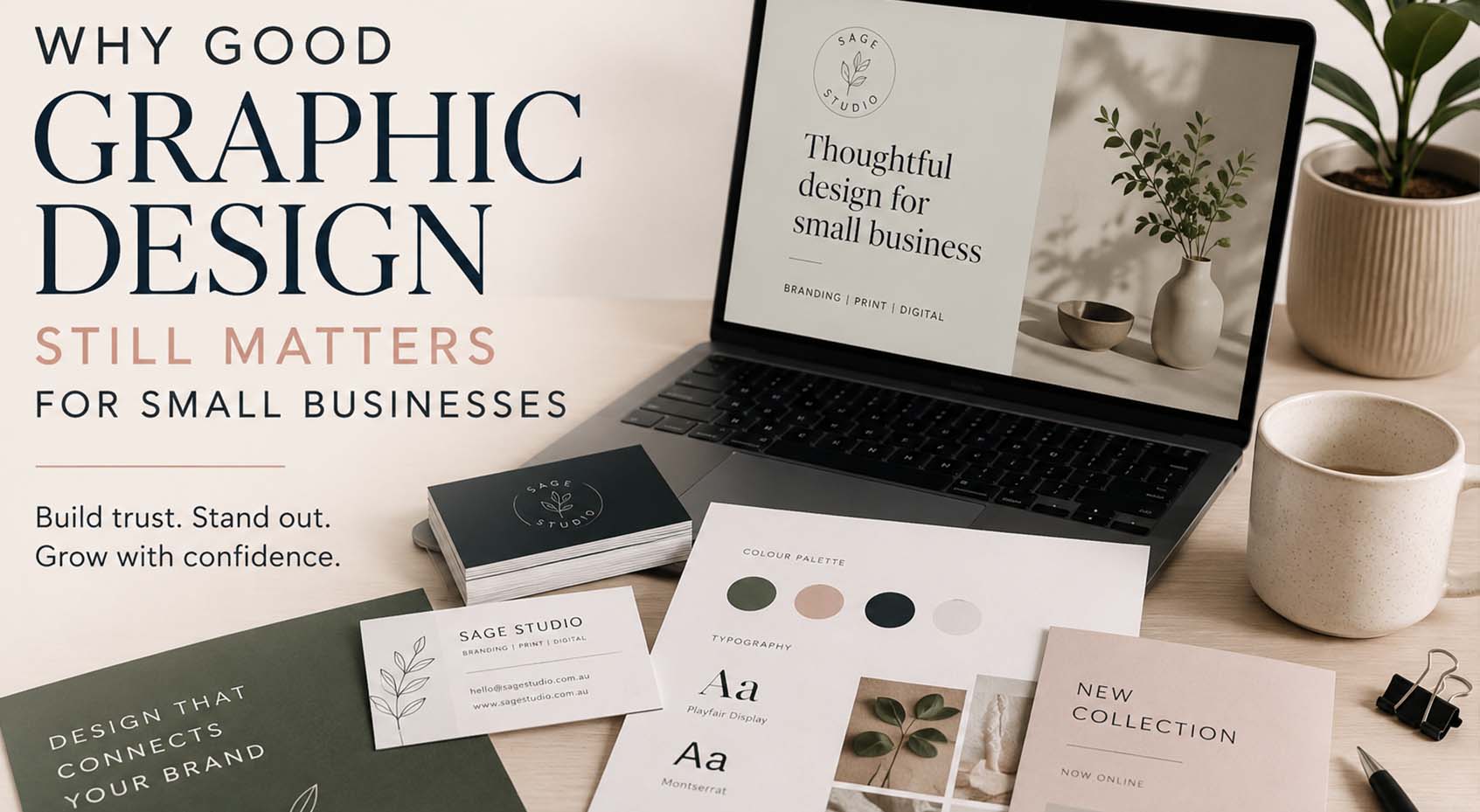
For a small business, graphic design is not just about making something look attractive. It shapes how people see the business before they call, book, visit, enquire or buy. A logo, colour palette, flyer, business card, sign, website graphic or social media post can all influence whether a customer feels confident enough to take the next step.
That is why professional graphic design still matters.
First Impressions Happen Quickly
Most people make quick judgements when they come across a business for the first time. They may see a social media post, a shop sign, a flyer, a website, a business card or a Google Business Profile. Before they read every detail, they get a feeling.
Does the business look professional? Does it feel trustworthy? Is it clear what they do? Does the style match the type of customer they want to attract?
Good design helps answer those questions visually. It gives a business a more polished and considered appearance, which can be especially important when customers are comparing several local options.
A Logo Is Only One Part of the Brand
Many small business owners think branding begins and ends with a logo. A logo is important, but it is only one part of the bigger picture.
A strong visual identity can include:
- logo design and logo variations
- brand colours
- typography
- business cards
- flyers and brochures
- social media graphics
- website graphics
- signage
- email signatures
- digital and print templates
When these pieces work together, the business becomes easier to recognise. When they are inconsistent, the brand can feel scattered, even if the business itself is excellent.
Consistency Builds Trust
Customers may not always notice the technical details of good design, but they often notice when something feels inconsistent.
If a business uses one style on Instagram, another on its website, a different font on its flyers and an outdated logo on its business card, the overall impression can feel messy. That does not help build trust.
Consistent graphic design helps a business look more organised. It creates a clear visual thread across every place the customer sees the brand. This can make a small business feel more established, professional and memorable.
Good Design Is More Than Decoration
Graphic design is often mistaken for decoration, but the best design is practical. It helps communicate clearly.
A good designer considers things like:
- how easy the text is to read
- whether the layout guides the eye properly
- whether the colours suit the business and audience
- how the logo works at different sizes
- whether the design will print cleanly
- how the brand will appear across digital and physical materials
- whether the overall look feels right for the business
These are not random choices. They are design decisions made with purpose.
AI Can Help, But It Does Not Replace the Human Eye
AI has become a useful creative tool. It can support brainstorming, generate rough ideas and help explore visual directions. Used well, it can be part of a modern design process.
But AI does not replace a skilled designer.
Good graphic design still needs taste, judgement, imagination and an understanding of the business behind the visuals. A designer can see when a layout feels unbalanced, when a font does not suit the brand, when a colour palette feels wrong, or when a logo may look good on screen but fail in print.
AI can generate options. A designer knows what to do with them.
Small Businesses Need Design That Works in the Real World
A design does not only need to look good on one screen. It needs to work across real business situations.
A logo may need to appear on a website, social profile, business card, invoice, flyer, sign, uniform or vehicle. A brand colour may need to work online and in print. A flyer needs to be readable. A social media graphic needs to catch attention without becoming cluttered.
This is where professional design becomes valuable. It helps small businesses avoid the common problem of having visual materials that look fine individually but do not work together as a brand.
Professional Design Helps a Business Grow With Confidence
Many businesses begin with DIY design, and that is understandable. In the early stages, business owners often need to move quickly and keep costs under control.
But as a business grows, its visual identity often needs to grow too. A logo that was fine at the start may no longer suit the direction of the business. A collection of mismatched templates may start to look unprofessional. Printed materials may need to feel more polished. Social media graphics may need a more consistent style.
Professional graphic design helps bring those pieces together. It gives the business a clearer visual foundation and makes future marketing easier to manage.
Local Businesses Need to Be Recognisable
For local small businesses, recognition matters. Customers often see a brand several times before they make contact. They might notice a sign, then see a social media post, then visit the website, then pick up a flyer, then ask for a quote.
If the branding is consistent at every step, the business becomes easier to remember.
For businesses looking for thoughtful, human-led graphic design Sunshine Coast, Elly Graphic Design creates logo design, brand identity, print design and digital design for small businesses that want a more polished and professional visual presence.
Final Thought
Good graphic design is not about making a business look bigger than it is. It is about helping the business look as good as it actually is.
It gives people confidence. It creates recognition. It makes marketing feel more consistent. It helps a small business show up with clarity and care.
AI tools and templates may have made design more accessible, but they have not replaced the value of a real creative eye. For small businesses that want to be remembered, human-led design still matters. https://ellygraphicdesign.au/